BAKU EXCHANGE夢の取引所
Dream Dock ↗
Sell this dream?█
Speculative Design · 2026 · Madoka

BAKU EXCHANGE

A speculative-design project in three works, imagining a world where dreams are bought and sold through the virtual currency BAKU.

01 Dream Dock 02 Just Buy Nightmare! 03 Dream Contagion
00Statement

In medieval Japan, dreams were not thought to well up from within the individual, but to arrive from outside and be handed over — as revelations from gods and buddhas, or as things received from others. The Uji Shūi Monogatari records the strange transaction of buying another person's auspicious dream. Dreams were held to run ahead of the future; in the medieval world they were actually traded like goods, and people kept a network of dreams, publicly told and passed along.

BAKU EXCHANGE consists of three works. Taking the medieval world of dreams as its point of departure, it imagines a world in which dreams are bought and sold on a dream market through the virtual currency BAKU.

In Dream Dock, people relinquish their unwanted dreams. Each surrendered dream is listed on the exchange as a dream stock, and an auspicious dream or a nightmare that one person let go becomes someone else's dream. The price of each listing is connected to real-world data: the page views of the English Wikipedia article corresponding to the dream's theme, the frequency with which that dream has been spoken of in books, and statistical and scholarly data measuring the dream's subject itself — layered together, they render visible a hundred years of attention to that dream.

In Just Buy Nightmare!, a "dream economist" analyzes the dream market — how the story called "the end" has been told by human beings.

Dream Contagion is a more personal work. In a family video, my younger self films my mother back with a toy camera. Seeing, filming, keeping — in the instant these acts reflect one another like mirrors, slipping and carrying across people's desires, a small original appears: that dreams are not enclosed within the individual, but something that spreads to others and repeats itself.

01Website

Dream DockA market of dreams

An exchange where the unwanted dreams people let go are listed as dream stocks. One person's auspicious dream or nightmare becomes someone else's dream.

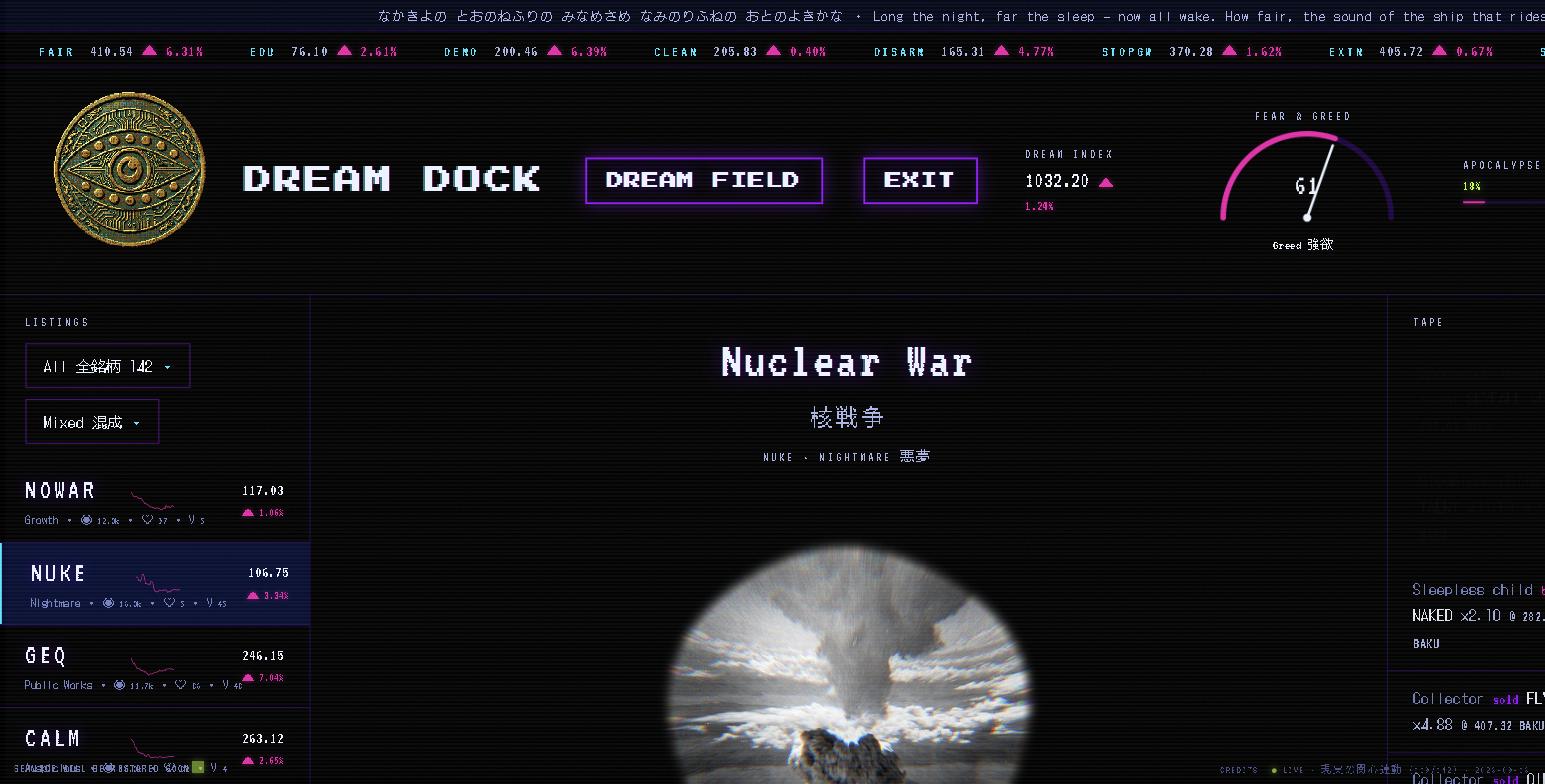
The work itself runs in a browser. On a screen recalling a 1990s financial terminal, 142 dream stocks are listed. Each carries the market's straight-faced sales pitch, the honest first-person voice of the seller who let the dream go, and an epigraph. The market keeps updating every day whether or not anyone is watching — a terminal in an exchange with no one left, dutifully displaying prices.

How prices work

  • English Wikipedia page views — daily attention to the article matching each dream's theme, fetched automatically at 21:00 UTC and folded into the price.
  • Frequency in books — how the dream has been spoken of since 1900, via Google Books Ngram.
  • Statistics of the phenomenon itself — conflict deaths, global temperature, nuclear warheads, refugees, inequality, aviation accidents, GDP growth. Scholarly datasets measuring the dream's subject are wired into 54 listings.
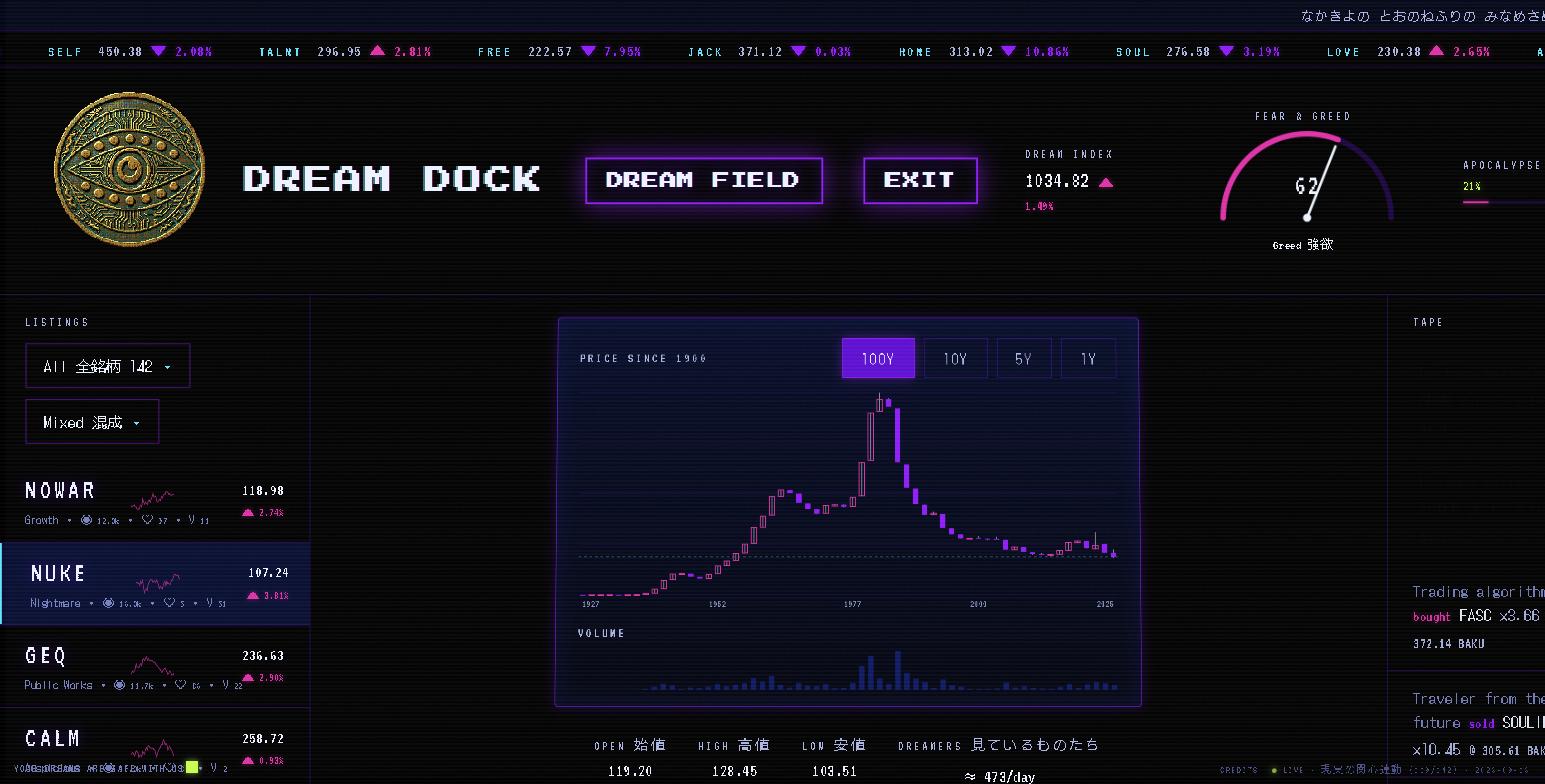
  • A hundred-year chart — layered together and drawn as candlesticks: a century of attention to that dream.
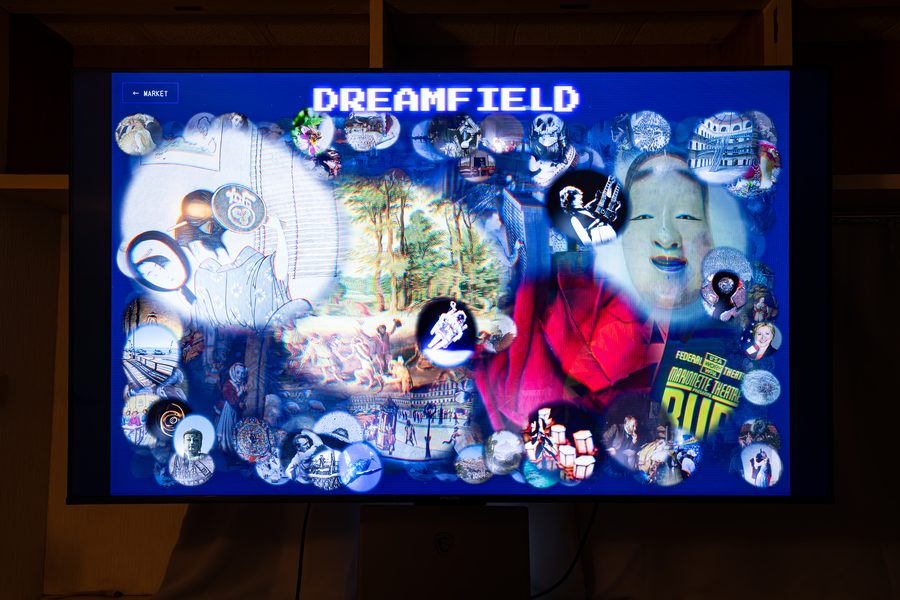
  • Dreamfield — listings drift as orbs in a sea of dreams. Touch one and its seller speaks.
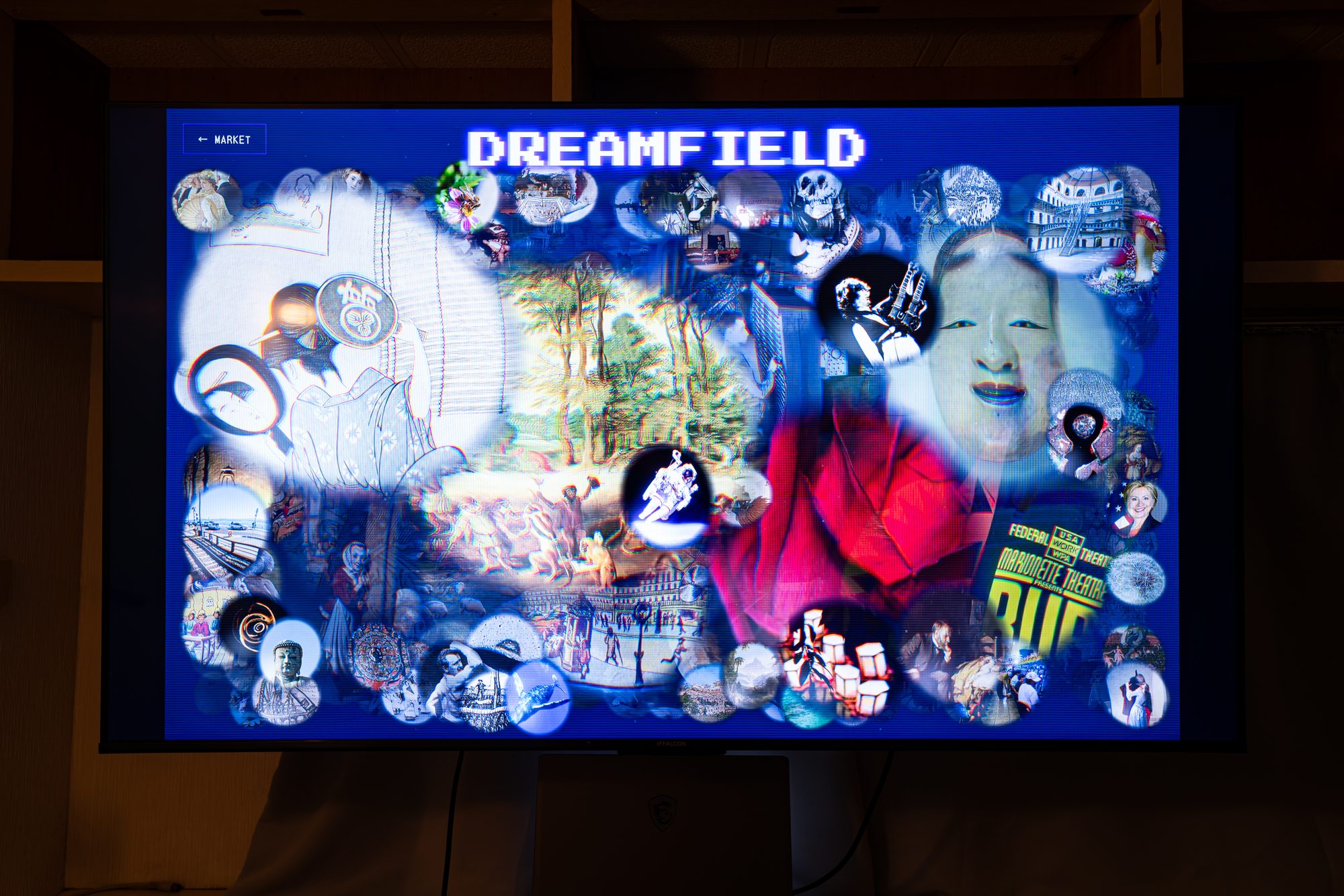
Dreamfield displayed on the exhibition monitor
Dreamfield — installation view
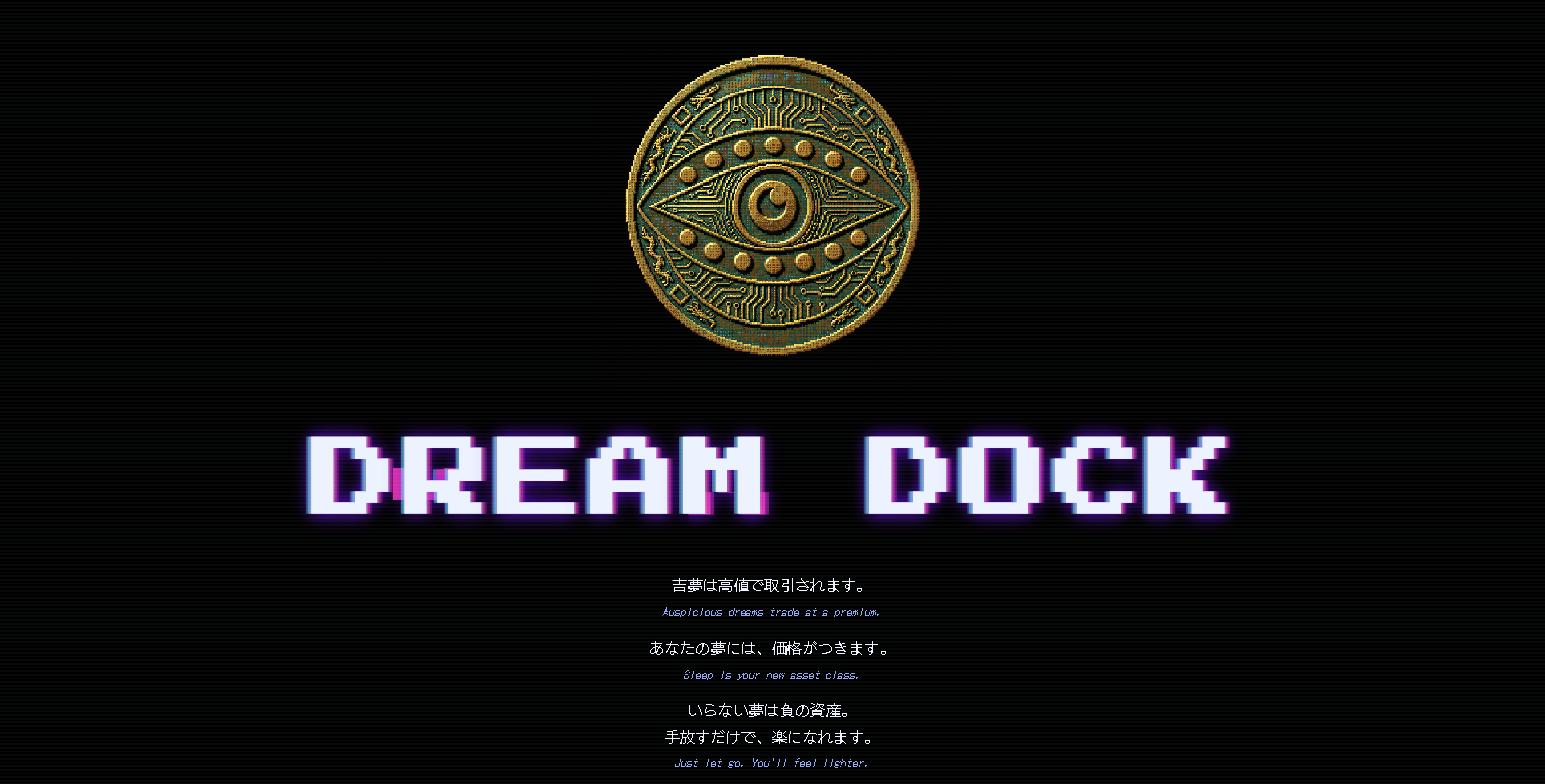
Dream Dock title card
Entrance — "Auspicious dreams trade at a premium."
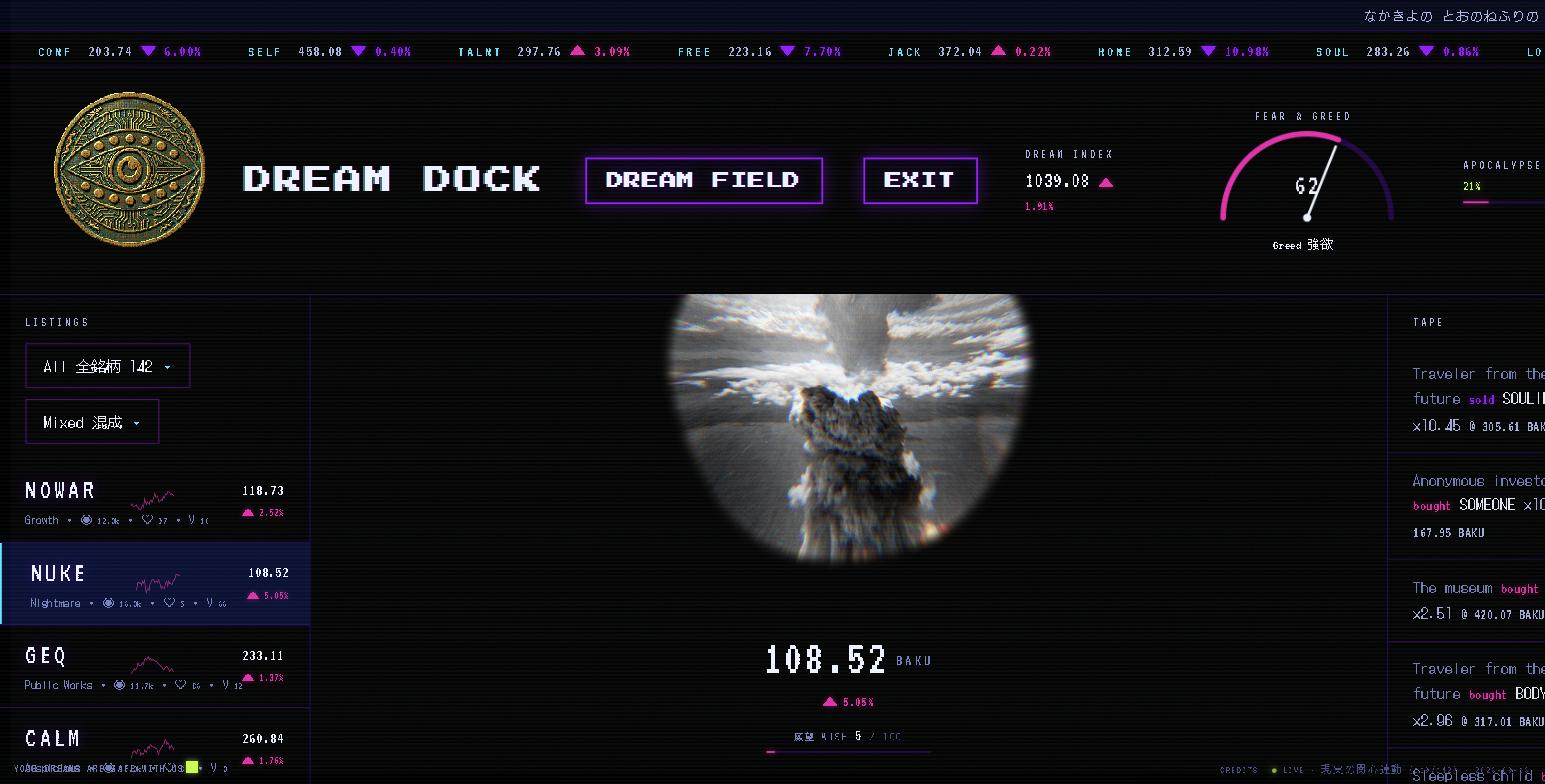
Dream Dock market — NUKE listing
Market — listing NUKE, "Nuclear War"
Dream orb and price
The dream orb and its current price in BAKU
100-year price chart
Hundred-year chart, 1927 to today

The work itself can be experienced in your browser.

iPad or desktop recommended. Enter the market through "Incubation" on the title screen.

02Mixed media

Just Buy Nightmare!A market report on the end of the world

A "dream economist" reports live from the dream market. Reading out the Dream Index, Fear & Greed and the Apocalypse Meter, the voice calmly analyses how "the end of the world" has been one of humanity's most successful products for over a century.

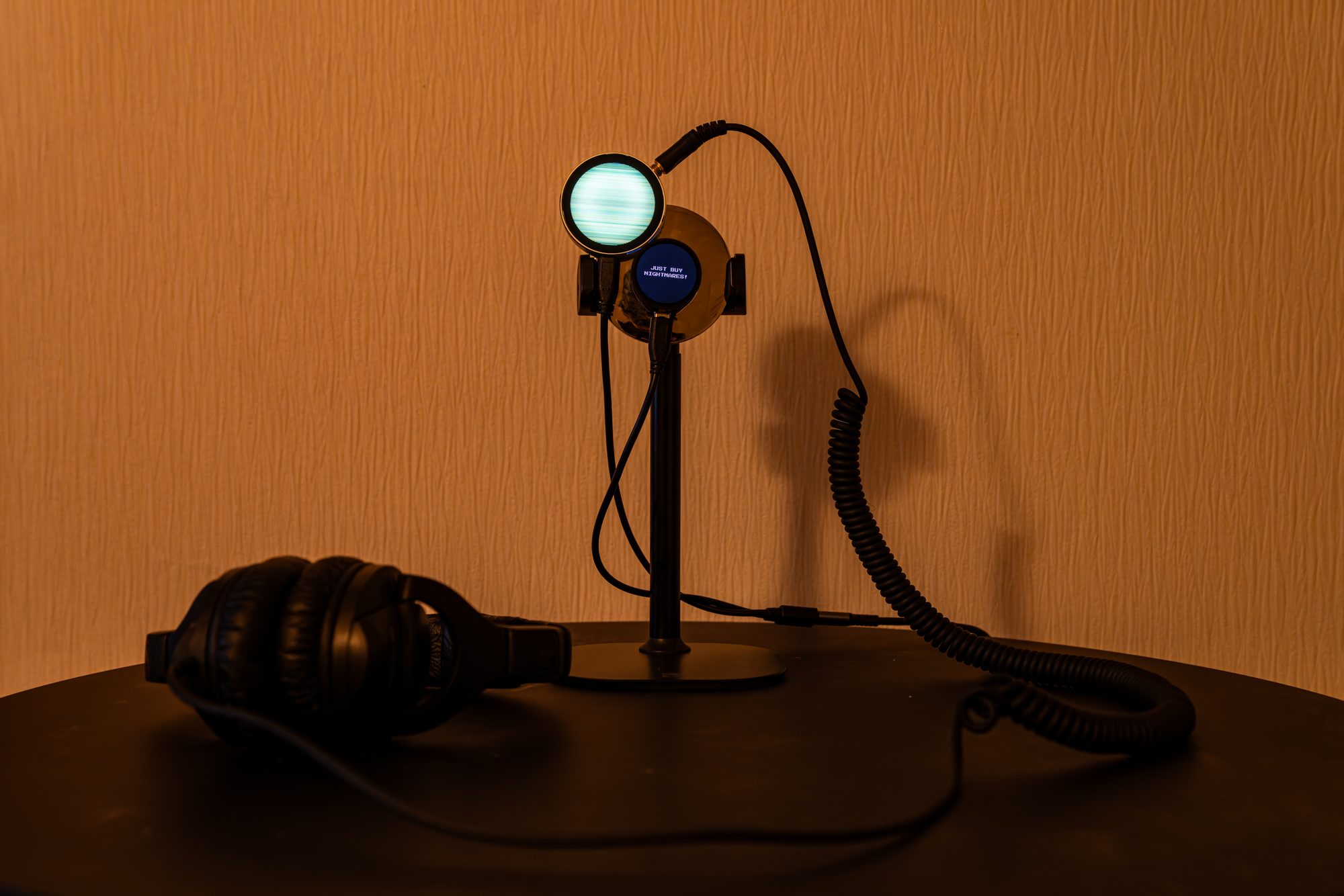
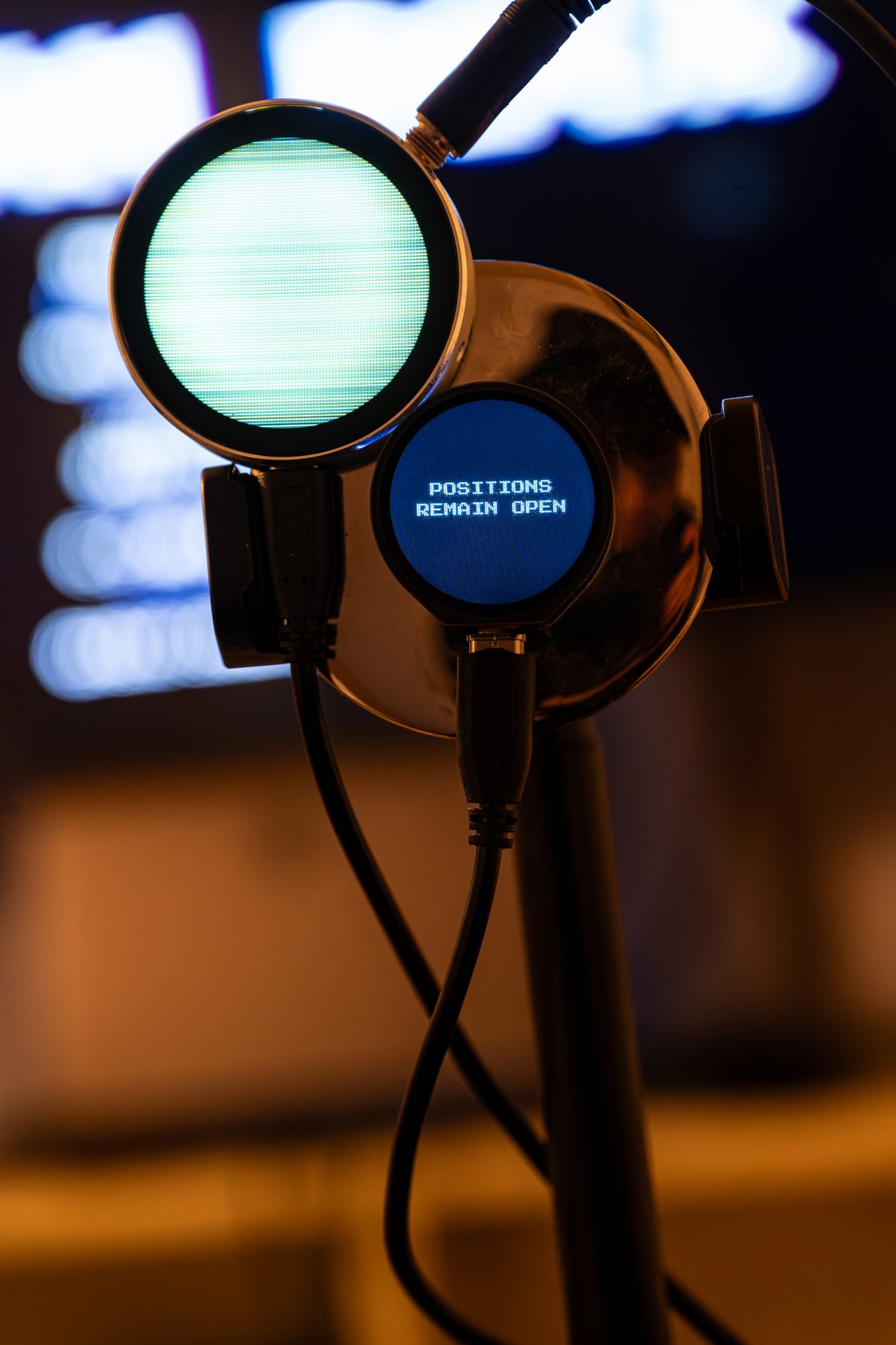
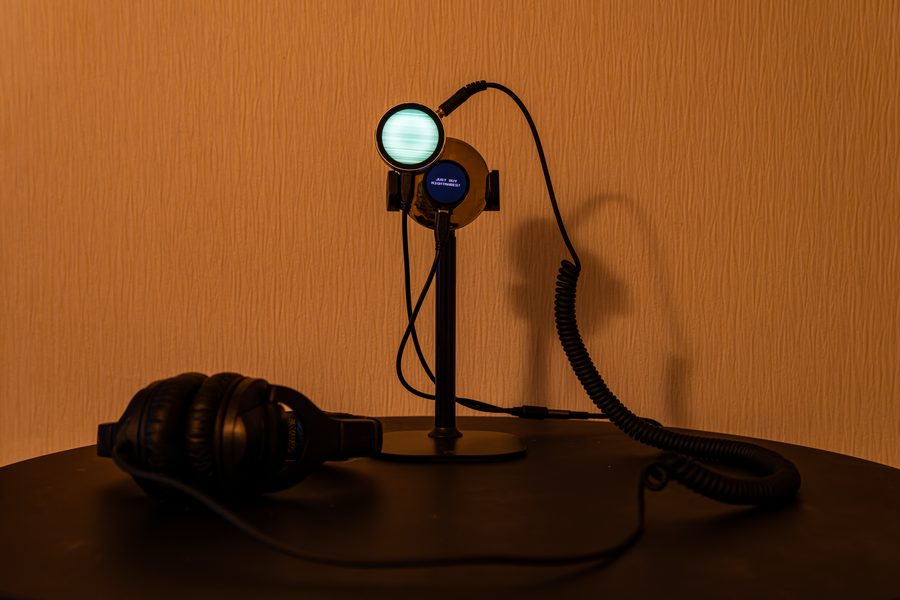
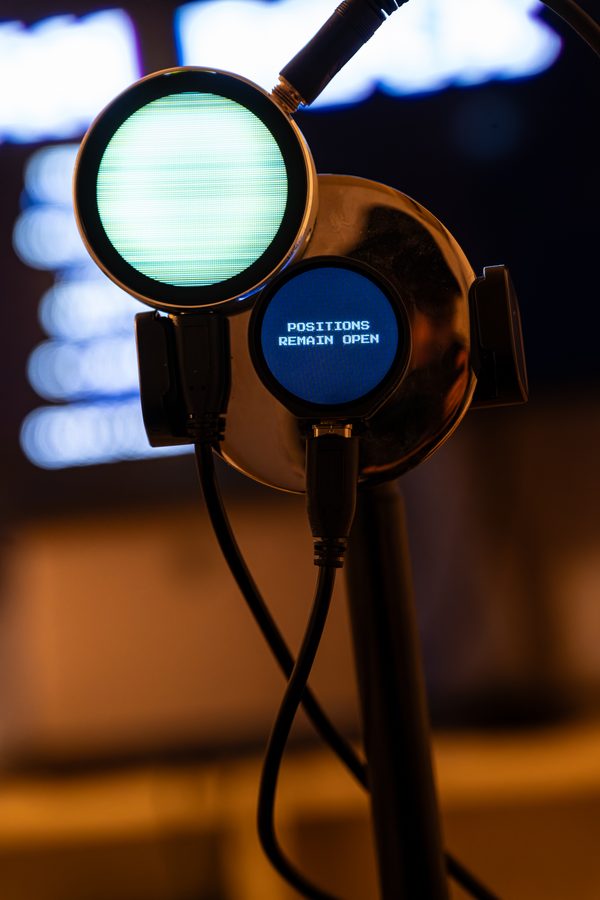
In the exhibition two round terminals stand side by side: one alternates English and Japanese captions, the other pulses colour to the sound. Visitors listen to the 4'15" loop on headphones.

The product was never the end of the world.
The product was anticipation.
Two round terminals and headphones on a table
Installation view — two round terminals and headphones
JUST BUY
NIGHTMARES!
0:00 / 4:15
Press ▶ to play the audio. Captions appear in sync, exactly as in the exhibition. Headphones recommended.
Read the full transcript (English / 日本語)
    Close-up: POSITIONS REMAIN OPEN on the round caption terminal
    "POSITIONS REMAIN OPEN"
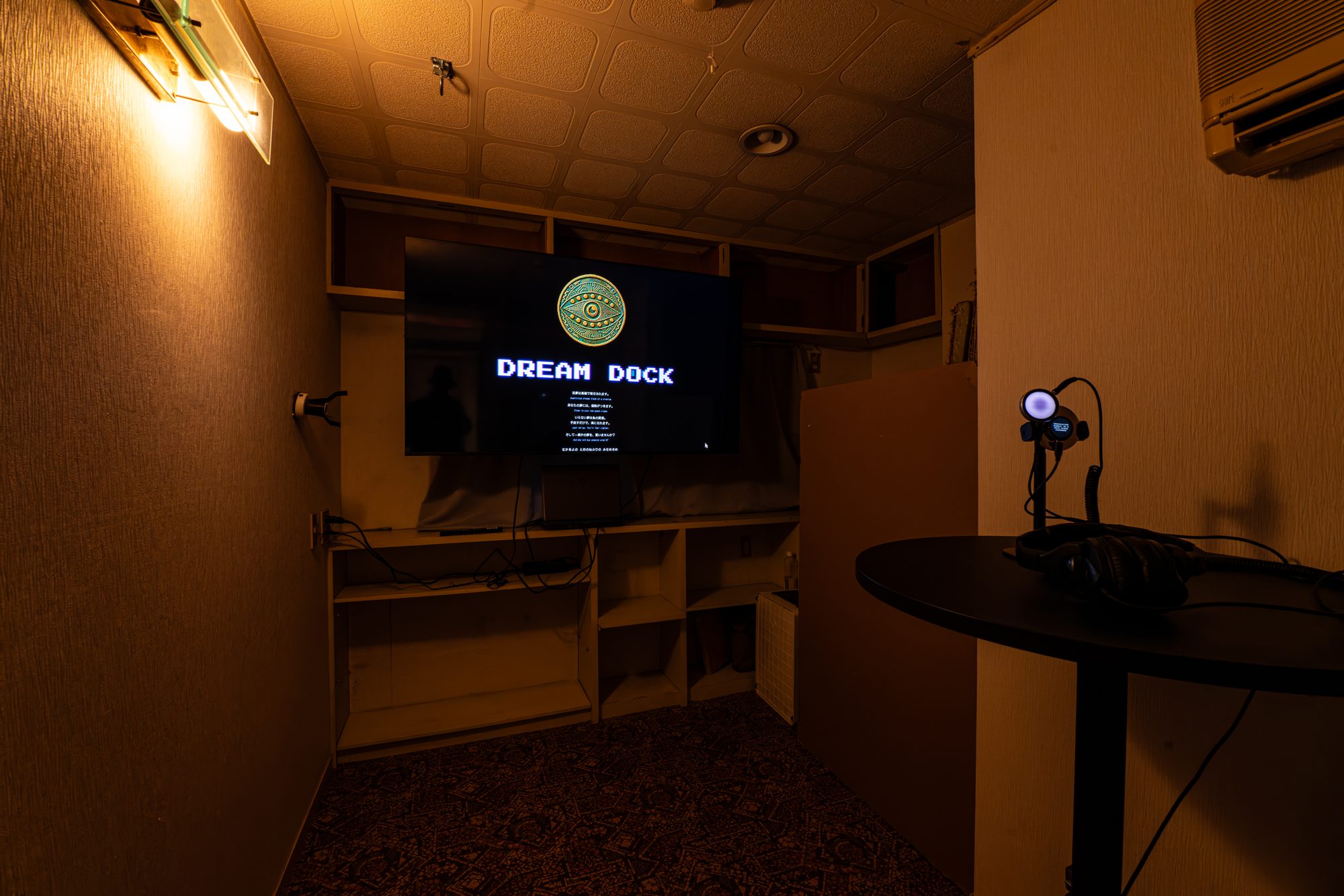
    Installation room with Dream Dock on the monitor and the terminals on a table
    The room — terminals in front, Dream Dock on the monitor behind
    03Mixed media

    Dream ContagionA family video, looping

    Do you want to do
    what Mommy does?
    Touch the screen

    In a family video, my younger self films my mother back with a toy camera.

    Seeing, filming, keeping — in the instant these acts reflect one another like mirrors, slipping and carrying across people's desires, a small original appears: that dreams are not enclosed within the individual, but something that spreads to others and repeats itself.

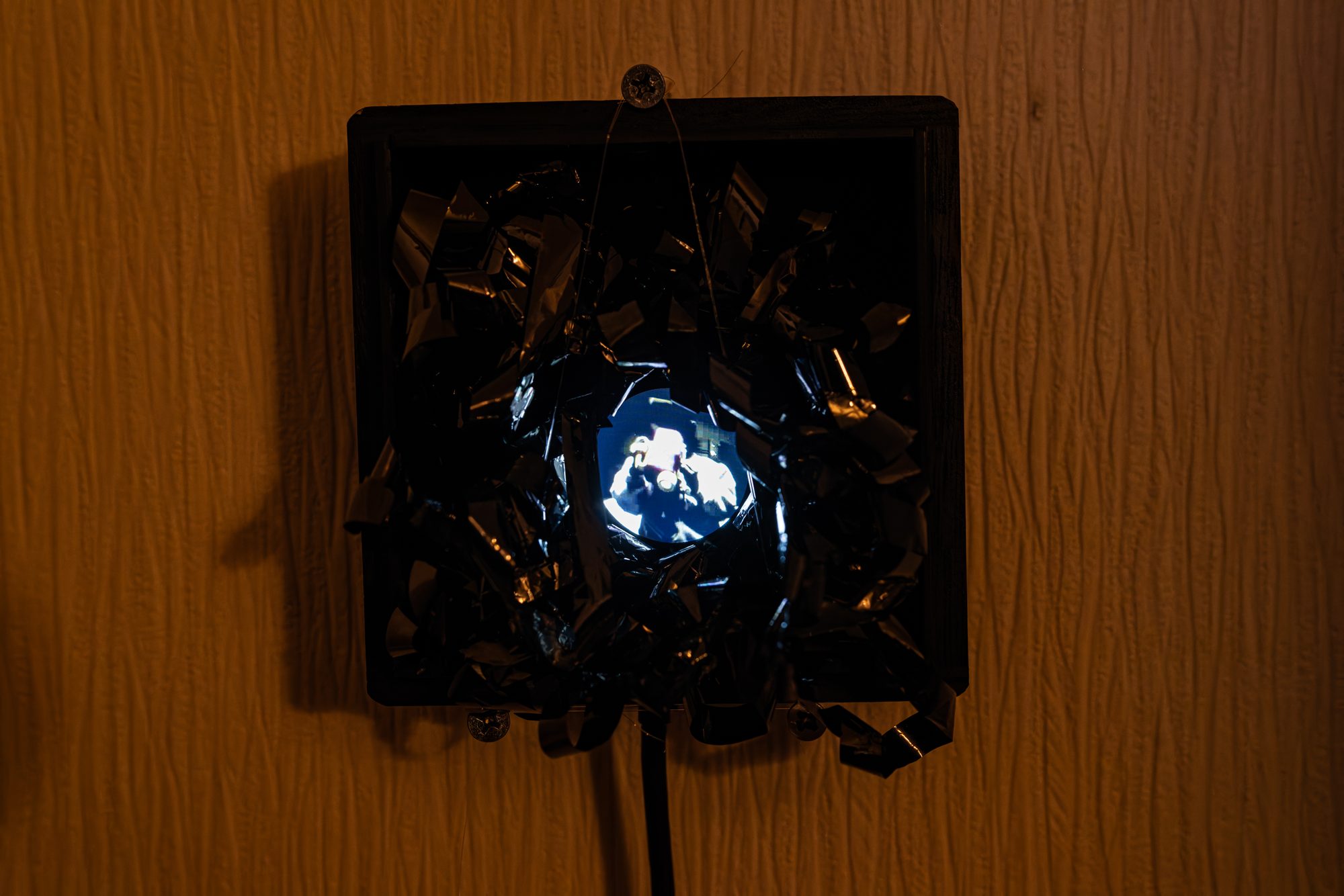
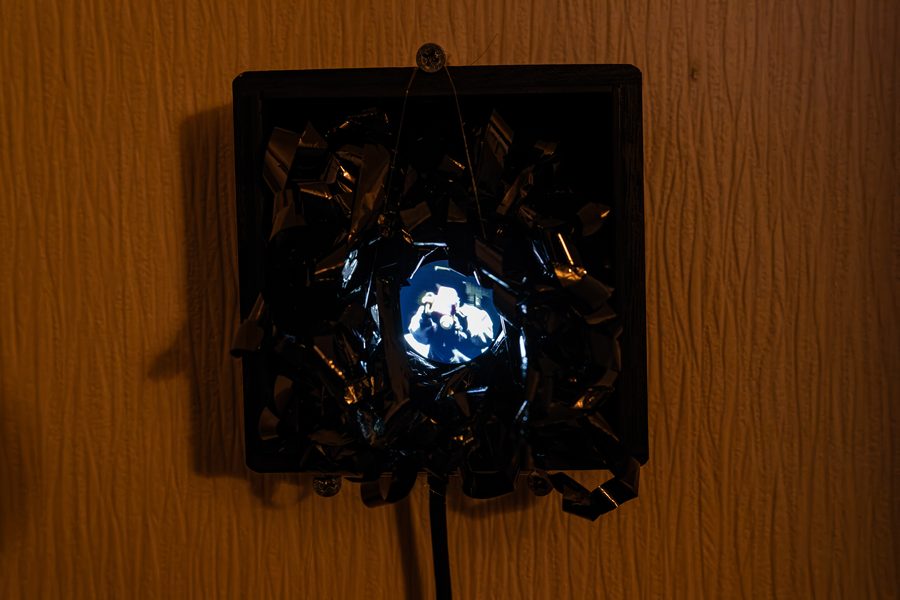
    Inside a wooden box, buried in tape pulled from 8mm video cassettes, a small round LCD loops the family video. Touch the screen and the picture breaks into noise, and white letters surface: "Do you want to do what Mommy does?"

    Wooden box on the wall, round LCD glowing among tape
    Installation view — the wooden box on the wall
    04Exhibition

    Installation viewsyOu Tokyo_ART STUDIO · 2026.09

    The three works were shown in a single room: Dream Dock on the monitor at the back, the Just Buy Nightmare! terminals and headphones on the table in front, and the Dream Contagion box on the wall.

    Photo: Kenta Umeda

    05Credits
    Artist
    Madoka
    Works
    《Dream Dock》 2026 — Website
    《Just Buy Nightmare!》 2026 — Mixed media
    (video, sound, round LCDs)

    《Dream Contagion》 2026 — Mixed media
    (wooden box, 8mm video cassettes, round LCD)
    Special Thanks
    REVITAL COHEN & TUUR VAN BALEN
    Exhibition
    yOu Tokyo_ART STUDIO, Tokyo, September 2026
    Installation photography
    Kenta Umeda
    Bibliography
    Sakai, Kimi. Yumegatari, Yumetoki no Chūsei [Dream-telling and Dream-reading in Medieval Japan]. Asahi Shimbun, 2001.
    Saigō, Nobutsuna. Kodaijin to Yume [The Ancients and Their Dreams]. Heibonsha Library, 1993 (first published 1972).
    Links
    Dream Dock — baku-exchange.vercel.app
    What is BAKU?
    Dream Dock — Credits & References